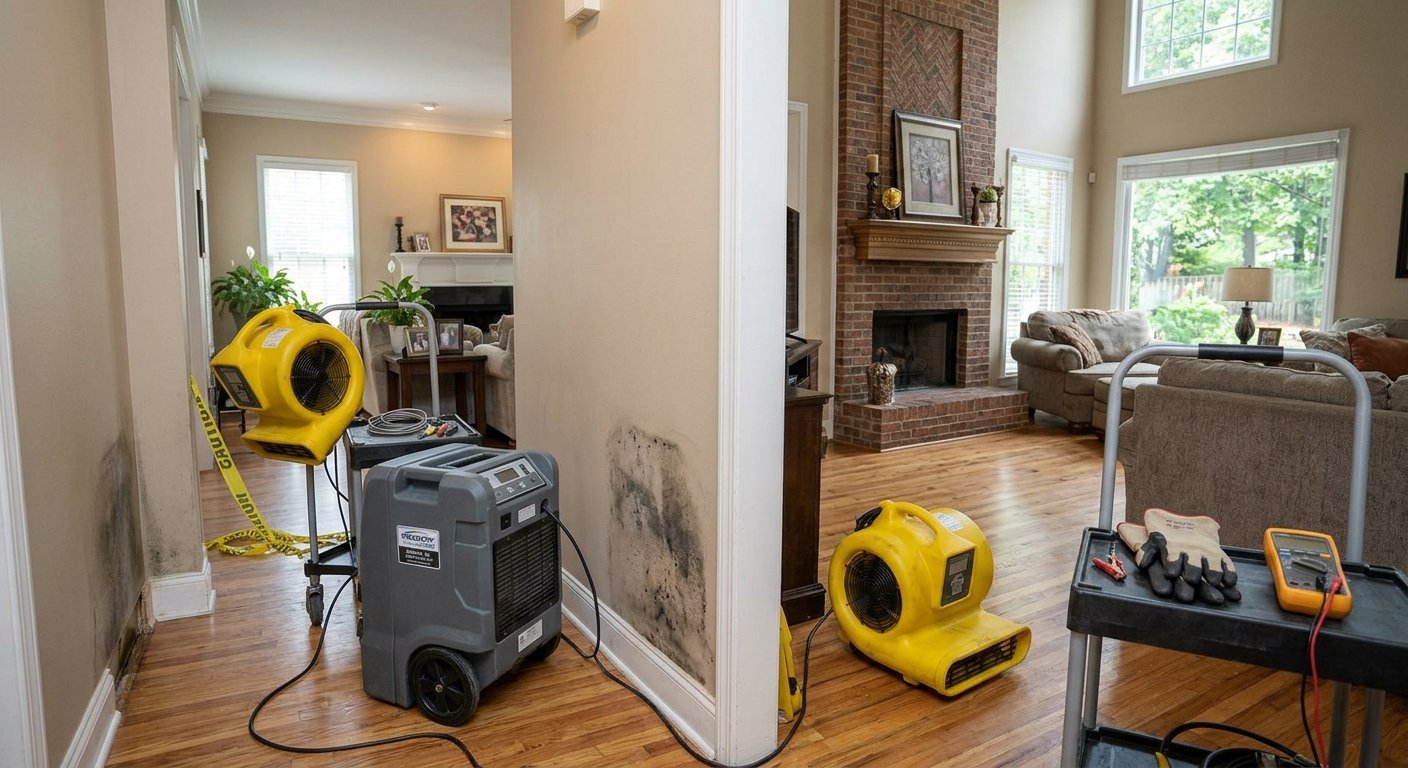
How Long Does It Take to Dry Walls After Water Damage in Marietta, GA?
Dealing with water intrusion in your home is stressful, and one of the biggest questions homeowners ask is: How long does it take to dry walls after water damage?
Under ideal conditions using professional-grade structural drying equipment, wet walls typically take 3 to 5 days (72 to 120 hours) to dry completely. However, if you leave the walls to dry naturally without commercial air movers or dehumidifiers, the process can drag on for weeks. That delay creates a breeding ground for mold and causes severe structural rot.
If you are dealing with moisture trapped in sheetrock, baseboards, or wall cavities, time is critical. The first 24 to 48 hours determine whether your drywall can be saved or if it must be completely torn out and replaced.
5 Critical Factors That Impact How Fast Your Walls Dry
No two water damage scenarios in Marietta are exactly alike. Several key factors determine whether your walls dry in three days or require an extended drying schedule:
1. Depth of Moisture Penetration & Water Volume
A light surface splash dries quickly. However, standing water from a burst pipe or prolonged overflow saturates sheetrock through capillary action—meaning the water wicks upward into the wall board like a sponge. The deeper the moisture penetrates into the gypsum core, the longer it takes to extract.
2. Type of Wall Materials & Insulation
- Drywall & Gypsum Board: Highly porous and prone to losing structural integrity when saturated.
- Wall Insulation: Fiberglass batt insulation sitting behind wet sheetrock absorbs massive amounts of water. Once wet, fiberglass insulation loses its R-value and holds moisture directly against wood studs.
- Vapor Barriers & Coatings: High-gloss paint, oil-based primers, or vinyl wallpaper act as vapor barriers. They trap moisture inside the wall cavity, preventing natural evaporation and drastically extending drying times.
3. Source and Category of Water
Clean water from a supply line burst or a washing machine leaking water in Marietta, GA presents fewer health hazards and allows for aggressive drying techniques. On the other hand, grey water (like dishwasher runoff) or black water (sewage backups) demands strict containment, specialized sanitization, and often full material removal rather than standard drying.
Note: If water dripped down from an upper floor or ceiling fixture, understanding what causes water stains on ceilings can help you pinpoint the leak source before starting repairs.
4. Indoor Climate and Airflow (Psychrometrics)
Georgia’s humid climate makes unassisted drying nearly impossible during warm months. High outdoor humidity reduces the rate of evaporation. Professional structural drying relies on controlling indoor psychrometrics—balancing relative humidity, ambient temperature, and vapor pressure to pull trapped moisture out of building materials.
5. Type of Drying Equipment Used
Standard household box fans and residential dehumidifiers lack the power needed to extract bound moisture from deep inside wall cavities. Industrial LGR (Low Grain Refrigerant) dehumidifiers and high-velocity axial air movers are necessary to achieve complete structural drying within the 3- to 5-day window.
Step-by-Step Breakdown: The Wall Drying Process
To dry wet walls safely and effectively, restoration technicians follow a systematic structural drying protocol:
[Stop Leak & Extract Water] ➔ [Remove Baseboards / Drill Vent Holes] ➔ [Deploy LGR Dehumidifiers & Air Movers] ➔ [Daily Moisture Monitoring]
Step 1: Stop the Water Source and Extract Standing Water
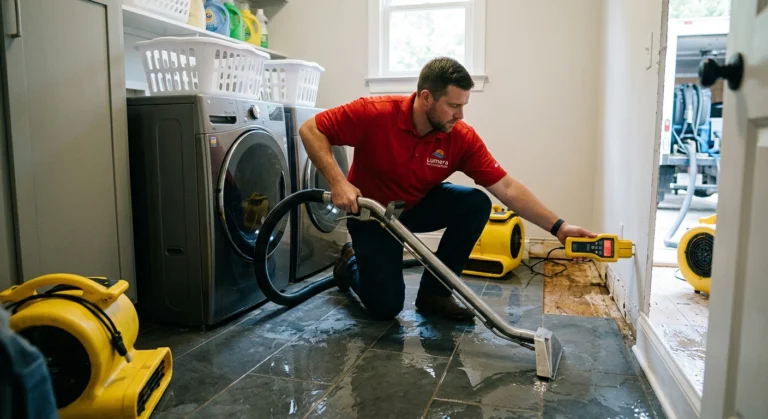
Before drying begins, the leak must be stopped completely, and any standing water on floors or along baseboards extracted using commercial vacuum equipment.
Step 2: Remove Baseboards and Create Air Injection Vent Holes
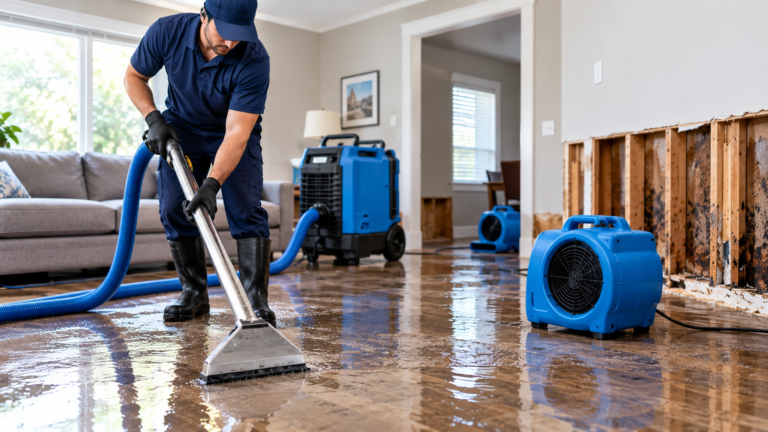
Water quickly pools along the bottom plate of wall framing inside the wall cavity. Technicians carefully detach baseboards and drill small “weep holes” or air injection access points along the bottom edge of the sheetrock. This allows warm, dry air to circulate directly inside the dark wall cavity where mold forms fastest.
Step 3: Deploy Commercial Structural Drying Equipment
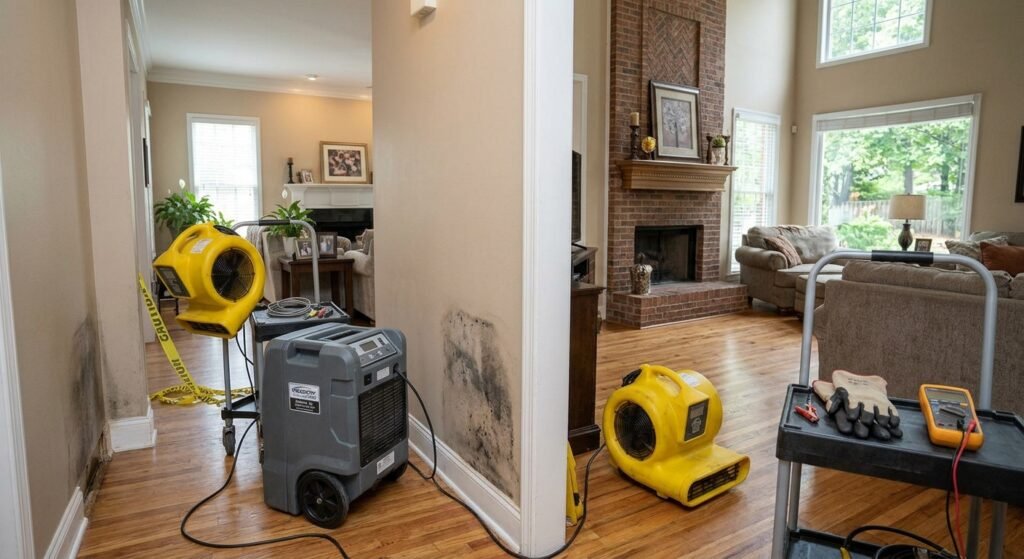
High-velocity air movers are angled along the wall surface to break the boundary layer of saturated air clinging to the drywall. At the same time, commercial LGR dehumidifiers pull the evaporated moisture out of the air, lowering the relative humidity inside the room to between 30% and 50%.
Step 4: Daily Moisture Tracking & Verification
Technicians take daily readings using non-invasive moisture meters and thermo-hygrometers to track progress. Equipment is adjusted until the materials reach their standard Equilibrium Moisture Content (EMC).
Can You Save Wet Drywall, or Does It Need Replacement?
Not all wet drywall has to be thrown away, but knowing when to restore versus when to replace saves time and money.
| Material Condition | Can It Be Saved? | Required Action |
| Clean Water Exposure (< 24–48 Hours) | Yes | Deploy commercial air movers and dehumidifiers immediately. |
| Swollen, Sagging, or Soft Drywall | No | Remove and replace; structural integrity is permanently compromised. |
| Contaminated Water (Category 2 or 3) | No | Cut out affected drywall at least 12–24 inches above the waterline. |
| Visible Mold Inside Wall Cavity | No | Full containment, removal of impacted sheetrock, and microbial treatment. |
How to Tell If a Wall Is 100% Dry (Don’t Rely on Touch Alone)
A common mistake homeowners make is assuming a wall is dry because the surface paint feels dry to the touch. Paint dries on the exterior long before the inner gypsum core or wood studs release their moisture.
To verify true structural dryness, professionals rely on specialized instruments:
- Pinless Moisture Meters: Scan large wall surfaces quickly using radio frequencies without damaging paint or wall coverings.
- Pin-Type Moisture Meters: Insert small probe pins into the drywall core or wood framing to measure exact moisture percentages deep inside the material.
- Thermal Imaging (Infrared) Cameras: Detect temperature differences across walls. Evaporating moisture causes cold spots on thermal cameras, exposing hidden wet pockets behind tile, cabinets, or plaster.
Why Professional Restoration Speeds Up Wall Drying in Marietta, GA
Attempting to dry wet walls using household tools often results in hidden moisture pockets, warped wall boards, and structural mold growth behind baseboards. Working with a dedicated local restoration company ensures your home is dried thoroughly using industrial-grade techniques tailored to Georgia’s humid climate.
For a full overview of how structural drying fits into total property recovery, read our water damage restoration in Marietta GA complete guide.
Need Fast Wall Drying Services in Marietta, GA?
If your home has suffered water damage from a leaking pipe, appliance breakdown, or severe storm, don’t wait for mold to take hold. Contact our local emergency response team for fast 24/7 water extraction and structural wall drying across Marietta and Cobb County.