Washing Machine Leaking Water in Marietta, GA? Causes, Emergency Cleanup, and Repair
Walking into your laundry room only to find standing water pooling around your feet is every homeowner’s nightmare. Whether it is a slow trickle hidden behind the dryer or a sudden, catastrophic burst hose while you are away, washing machine leaks are among the most frequent causes of residential water damage.
In Marietta and across Cobb County, high municipal water pressure combined with local atmospheric humidity means an unaddressed washer leak can rapidly cause warped hardwoods, ruined drywall, and severe mold contamination. Knowing what to do in the first few minutes—and understanding the underlying cause—can save you thousands in property repairs.
Immediate Action Plan: What to Do When Your Washer Leaks (First 15 Minutes)
When water is actively flowing across your floor, fast action prevents structural destruction. Follow these immediate safety and containment steps before attempting any repairs:
- Cut the Power Safely: Standing water creates a dangerous shock hazard. If the outlet or machine is submerged, do not step into the water to pull the plug. Go directly to your electrical breaker box and shut off power to the laundry room circuit.
- Shut Off the Water Supply: Turn the hot and cold water shutoff valves behind the machine clockwise until tight. If the valves are rusted or stuck, turn off your home’s main water shutoff valve.
- Protect Unaffected Areas: Contain the water using thick towels or blankets at doorways to prevent liquid from spreading into surrounding hallways, carpets, or hardwood flooring.
- Document the Damage: Take clear photos and videos of the standing water, the leaking appliance, and any damaged building materials for your insurance claim.
- Call for Professional Water Extraction: Standard household mops and shop vacs cannot pull moisture out of subfloors, baseboards, or wall cavities. Contact a certified restoration company immediately.
5 Most Common Causes of Washing Machine Leaks
Identifying where the water originates helps determine whether you need an appliance technician, a plumber, or a full water restoration team.
| Leak Symptom | Primary Cause | Urgency Level | Required Service |
| High-volume flooding during fill cycle | Burst supply hose or failed inlet valve | Critical (Emergency) | Restoration & Hose Replacement |
| Water backing up onto the floor during drain cycle | Clogged standpipe or drain hose detachment | High | Plumbing Drain Clearing & Restoration |
| Small puddle under the front door | Worn door gasket / boot seal | Moderate | Appliance Repair |
| Dripping behind the unit continuously | Leaking shutoff valve or inlet connection | High (Hidden Risk) | Plumbing Repair |
| Loud grinding with water underneath | Damaged drain pump housing or tub seal | Moderate to High | Appliance Repair |
1. Burst or Loose Supply Hoses
Rubber supply hoses are under constant pressure. Over time, heat, water pressure spikes, and age degrade the rubber, leading to micro-cracks or sudden bursts. A burst rubber hose can discharge up to 10 gallons of water per minute.
2. Clogged or Dislodged Drain Hoses & Standpipes
During the spin and drain cycles, your washer forcibly expels soapy water into a wall standpipe or laundry tub. Lint, soap scum, or small garments can clog the pipe, causing high-pressure backup overflow right into your wall cavity.
3. Defective Water Inlet Valve
Located inside the back of the washer, the inlet valve controls the entry of hot and cold water. Plastic valve housings can crack due to age or hard water mineral deposits, creating steady drips behind the machine during fill cycles.
4. Worn Door Gasket or Tub Seal (Front-Load Washers)
Front-loading washing machines rely on a thick rubber door boot seal to keep water contained. Dirt buildup, hair, or sharp objects in laundry loads can tear the rubber, letting water pool on the floor directly in front of the appliance.
5. Cracked Drain Pump
The drain pump drives water out of the tub and into the drain system. If a foreign object (like a coin or nail) bypasses the filter, it can crack the plastic impeller housing, causing water to leak onto the floor whenever the pump operates.
Step-by-Step Water Cleanup & Structural Drying Process
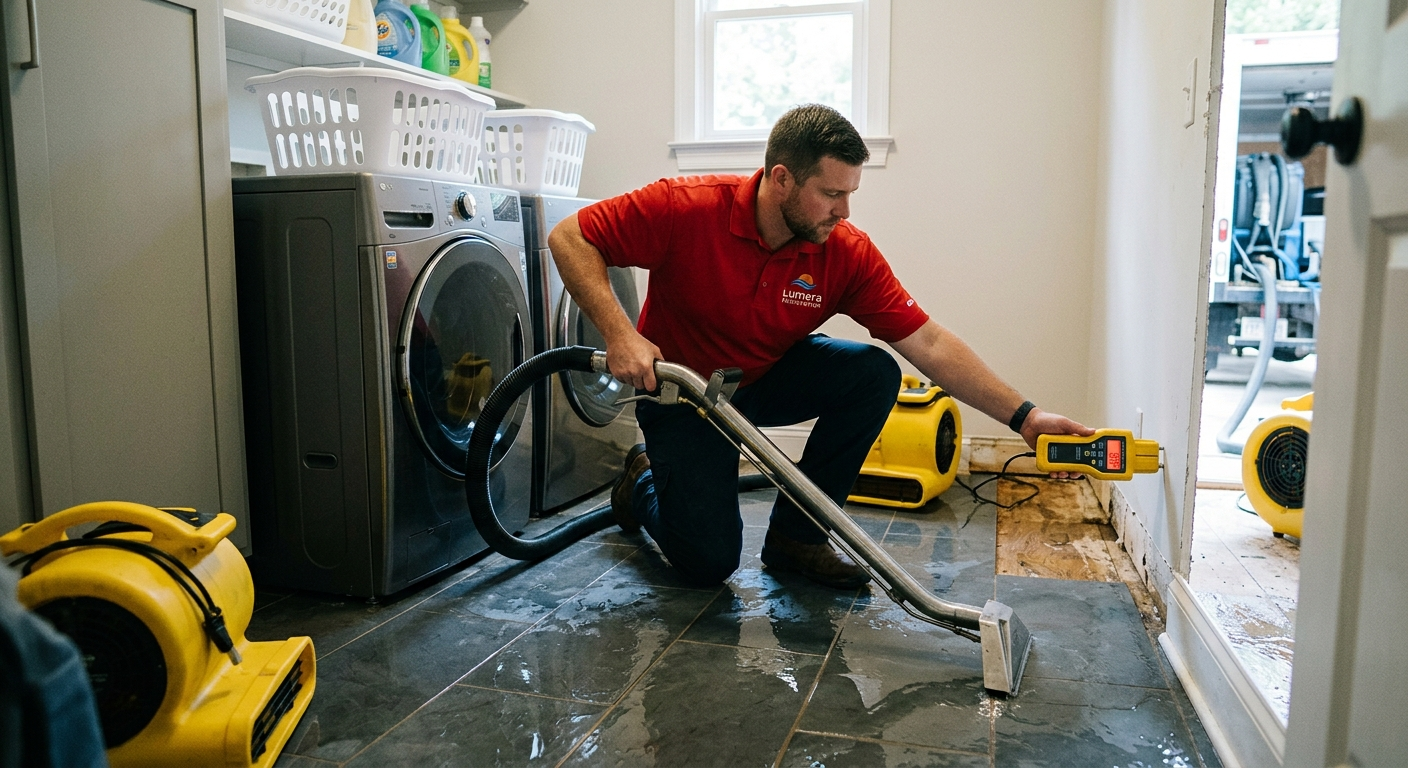
Extracting surface water is only 10% of the restoration process. True cleanup requires removing moisture trapped deep within building materials. At Lumera Restoration, our IICRC-certified process includes:
[ Water Extraction ] ➔ [ Moisture Mapping ] ➔ [ Applied Structural Drying ] ➔ [ Sanitization ]
  (Truck-Mounted Vacs)   (Thermal Imaging/Meters)   (Air Movers & Dehumidifiers)   (Antimicrobial Treatment)
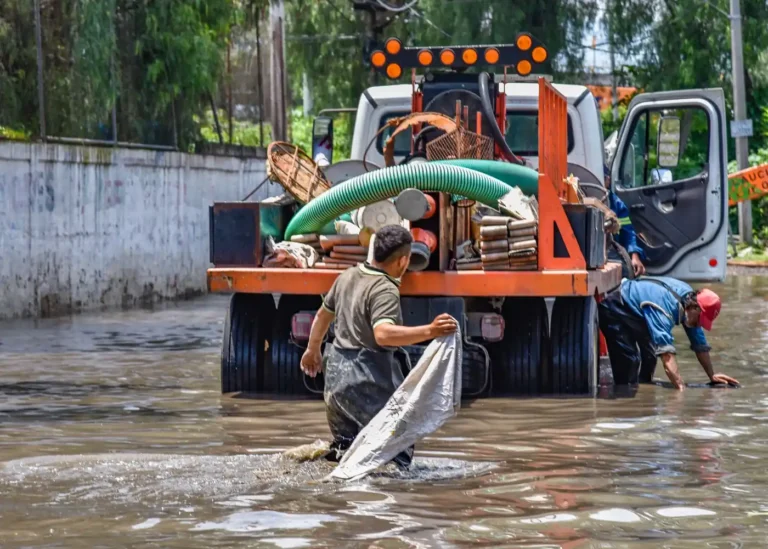
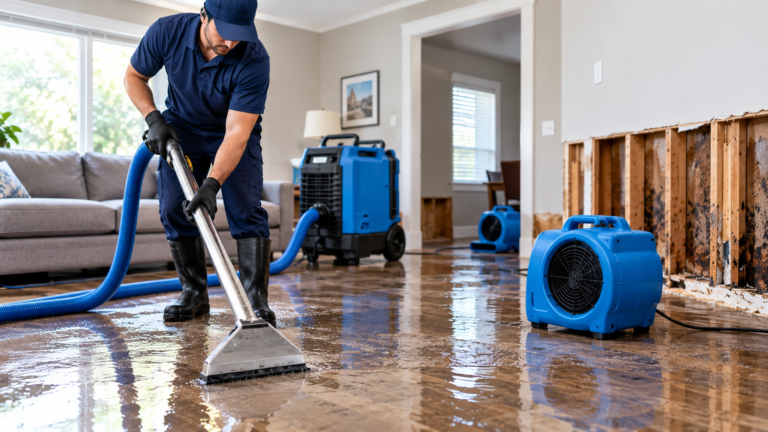
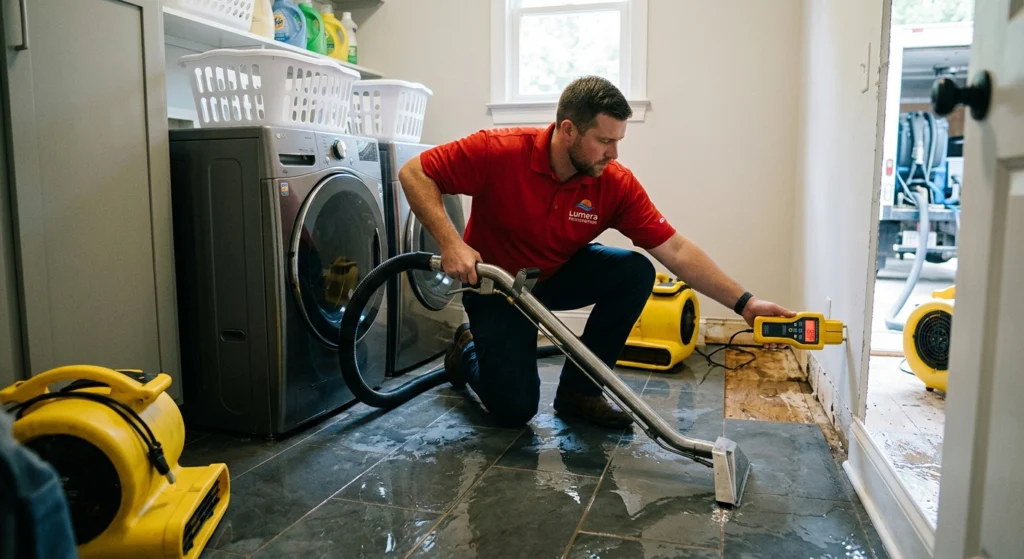
- Step 1: Industrial Water Extraction: Using heavy-duty truck-mounted vacuum units to pull hundreds of gallons of standing water out of tile, LVP, and carpet backings within minutes.
- Step 2: Moisture Mapping & Thermal Imaging: Water travels along floor joists and behind baseboards. We use infrared cameras and non-invasive moisture meters to map exact water boundaries behind drywalls and under subfloors.
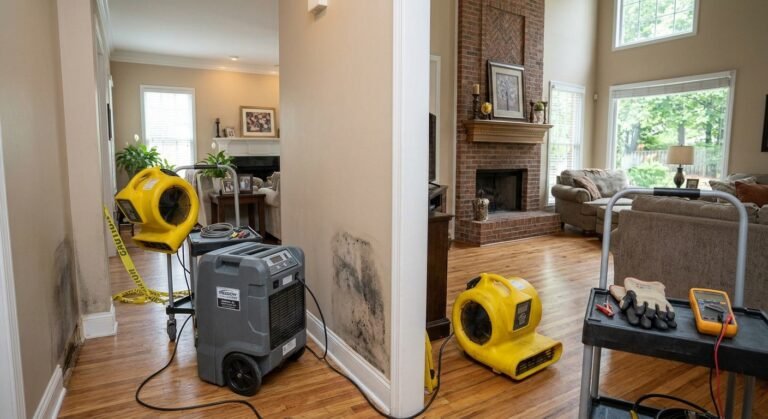
- Step 3: Applied Structural Drying: High-velocity air movers and Low Grain Refrigerant (LGR) industrial dehumidifiers are deployed to draw out trapped moisture without causing structural materials to warp or cup.
- Step 4: Antimicrobial Sanitization: Washing machine wastewater carries laundry detergents, lint, and bacteria. We apply EPA-registered antimicrobial treatments to neutralize odors and eliminate microbial risks.
The Hidden Danger: Why Georgia Humidity Accelerates Subfloor Rot & Mold
In Marietta, GA, dealing with water damage requires extra vigilance due to local climate conditions. The region’s high relative humidity severely slows natural evaporation.
When a washing machine leaks on an upper floor or in a ground-level laundry room, water rapidly migrates through floorboards into crawlspaces or lower-level ceilings. Because Georgia warmth and humidity create an ideal environment for organic decay, mold spores can germinate on wet subflooring within 24 to 48 hours.
Attempting to dry a laundry room flood with household box fans often creates a false sense of security—drying the surface while leaving subfloors soaked, leading to hidden dry rot, buckled floors, and airborne mold spore contamination.
How to Prevent Future Washing Machine Floods
Preventing appliance leaks takes minimal effort and protects your home from unexpected disasters:
- Replace Rubber Hoses with Braided Stainless Steel: Steel-braided hoses resist pressure spikes and eliminate the risk of sudden rubber hose bursts. Replace them every 3 to 5 years.
- Maintain Clearance Behind the Machine: Ensure at least 4 inches of space between the back of the washer and the wall to keep hoses from kinking or rubbing.
- Install an Automatic Shutoff Valve & Floor Pan: Place a heavy-duty plastic drain pan underneath your washer and install an electronic leak sensor valve that automatically cuts off the water supply the second moisture is detected.
- Inspect Hose Connections Biannually: Routinely check hose fittings for rust, corrosion, stiffness, or slow leaks.
Frequently Asked Questions
Does homeowners insurance cover water damage caused by a leaking washing machine in Marietta, GA?
Yes, standard homeowners insurance policies typically cover sudden and accidental water damage caused by appliance failures (such as a burst hose or failed pump). However, damage caused by long-term, neglected leaks may be denied. Lumera Restoration works directly with your insurance company to streamline the claims process.
How fast does mold start growing after a washing machine flood?
Under typical Georgia climate conditions, mold spores can begin colonizing damp drywall, carpet padding, and wood subfloors in as little as 24 to 48 hours.
Can I dry a leaked laundry room floor myself using standard household fans?
Household fans only move air across the surface and cannot evaporate moisture trapped underneath tile, luxury vinyl plank (LVP), or subfloors. Professional structural drying equipment and commercial dehumidification are necessary to prevent hidden rot and mold.
Flooded Laundry Room in Marietta? Get 24/7 Fast Emergency Water Extraction!
Don’t let a washing machine leak ruin your subfloors or compromise your family’s health with mold. The expert team at Lumera Restoration provides rapid, 24/7 emergency water extraction, structural drying, and complete restoration services across Marietta, GA, and Cobb County.